Showing posts with label avengers. Show all posts

Tuesday, December 3, 2013

Lizy's Project Proposal about S.H.I.E.L.D.

Title: (Currently) Marvel's "Agents of S.H.I.E.L.D." as an Emerging Fandom: A Study in Fan Culture.

Thesis: Marvel's new television series "Agents of SHIELD" will succeed based on how it is projected through online media by digital fan communities.  Digital fan communities help fans navigate their immersion in a fandom to find meanings within their entertainment through online discussion and remixed content.  Fandoms grow better when their fans share content with their friends.  Dr. Wickman suggested I look at the scholarship on immersion and see how it compares to what I am seeing in fan culture.

Relevance:  Marvel's "Agents of S.H.I.E.L.D. is only in its first season.  In terms of both its episodes and its relationship with the fans, it has been dynamic.  It is part of the larger Avengers and Marvel fandom and one of the show's main producers is cult favorite Joss Whedon.  If there was any time to examine a possible fandom in the act of forming, this is the moment.  There is a lot of potential for the show and a lot of tension in the fan community.

Format:  I am thinking a formal essay, except maybe with picture snapshots of twitter and facebook posts.  Maybe I could go multimedia--not for the formal paper but the final blog post or something.

Curation of Content:  I started snipping pictures of Facebook and Twitter posts over break.  It will keep up.  I am also accumulating reviews of the show and fandom articles on Zotero.

Curation of Secondary Sources: I have read/am reading books about the Star Trek and Dr. Who fandoms.  I also have a few scholarly articles which I have curated via Google Docs and Zotero (I got it for Dr. Burton's Shakespeare Class--it's awesome!)

Curation of Community: I am following SHIELD fan sites on Twitter, the Helicarrier podcast and Agent Coulson's Army, and they in return are following me.  I am being followed by PhantasticGeek on Twitter. I follow the official SHIELD sites on Twitter and Facebook and most of the show's actors on Twitter.

Social Proof:  I normally watch SHIELD with my roommates and one or two friends, so I can talk to them about it.  I also have a guy friend CJ in the medieval club who likes the show (I mean, a lot of clubbies like the show, but CJ especially).  And then I am in contact with Jason Hamilton who is an expert on fandoms in general.
People I don't know directly:  I exchanged emails with I also tweeted the author of a Buzzfeed article about the Marvel Cinematic Universe's big impact on Hollywood.

Venue:  
So I just found this huge blog page about scholarly blogs and journals devoted to fandom studies.  Here is the link if my classmates or other interested parties want it: http://fanstudies.wordpress.com/fan-studies-journals/

Of the ones listed above, I want to submit to Participations, which is a journal of audience reception studies. Their organization exists because (quote from website) "we recognise that these fields are not at present well-supported within the broad academic communities. There are few undergraduate courses and even fewer postgraduate courses which emphasise this work. Only a small number of research students work in this area, compared to other kinds of work on all the many forms of cultural and media expression. Yet we believe that the findings of audience and reception work are of crucial importance to all our fields – not least because claims about the audience are so frequently embedded within other kinds of work, and within public discourses about media and culture."  

So it sounds like mine is the kind of paper they are looking for.
I would also like to submit to Transformative Works and Cultures, since it deals more specifically with fandoms.
The real challenge I am setting for myself is The Journal of Science Fiction Film and Television, which is published by Liverpool University Press IN THE UK!!!!!!!  More likely than not, if I got accepted to a conference they put on I'd have to do a video conference, but hey, it would still be cool.  The guidelines say I have to use UK grammar and spelling and also use specific citations for TV shows and actors.  My response:

self-generated meme.
What I need to do next:

Go through the Dr. Who fandom book I read over the break and comb for quotes.
Create an orderly history of FB comments and twitter quotes (also block out names).
Listen to the Helicarrier podcast
Post link to this blog and "Tweethis" statement to social media sites.  Ask fans about their views of fandom and S.H.I.E.L.D.
Start writing out the paper
Curate fan art and memes specifically related to SHIELD.
FIND SCHOLARLY ARTICLES ABOUT:
humor
fandoms and immersion
FIND SCHOLARLY ARTICLES BY:
Henry Jenkins
Cheryl Harris
get fandom books renewed at library
Find more recent SHIELD reviews


Friday, November 22, 2013

Final Project: How it's Looking right Now. Feedback Welcome

A thesis is like a scientific equation.  You need certain elements to come together to create a certain product. I am not entirely sure what the final product is going to be.  But I am now going to take this opportunity to lay out my ingredients on the table to see what I have and will likely end up with. This is not my final thesis and venue, but just me thinking through my ideas.  Lots of feedback would be welcome.

I want to somehow respond to my ideas on immersion from the midterm.  A good secondary term for immersion is engagement.  Using the terms more or less interchangeably, I define an individual's engagement or immersion within a fandom as a relationship with a fandom with the end goal of promoting a change change of value within the fandom, either for oneself or for the fan community.  Open immersion adheres to the values of the fan community and compromises with them to create value.  Closed immersion is only interested in the individual's veiw of how a fandom/fans should exist or behave and seeks to tear them down.

I also want to return to the idea of memes.  A fandom is a meme or contagious idea, as are the social morays within them.  Cultures have their own distinctive symbols, such as the harpoon or the line to Moby Dick's whalers, or Captain America's shield in the Avengers films.  Like these more physical symbols, there are also internal ideas that spread and change within a culture, like a whaling captain's responsibility to his crew or, to use an Avengers example, "COULSON LIVES!" It can be as simple as a joke or a motto, or as complex as a value judgment about a certain topic delivered by a community or an individual.  I want to understand how memes spreading within a fan community are a manifestation of people working together to add meaning to a fandom and pass judgment on media.  Thus,the  people create the fandom and not just the entertainment industry. (hmm, nice ring to that). Memes are a product of fan immersion.

The 19th-century whaling industry depicted in Moby Dick is its own culture and, in a way, a fandom, at least the way Ishmael regards it and the way Ahab works within it.  The difference between Ishmael and Ahab, as I pointed out in my midterm, is that one is openly immersed and the other is closed.  "Where Ahab errs, it seems clear, is in sacrificing others to his egocentric interpretation of reality[....] Disvaluing speech with other men in his desire for a dialogue with speechless nature, Ahab inevitably experiences the isolation that  lack of communication and lack of community entail" (Barnett 148).  Ahab closes himself off from all other interpretations of the White Whale than his own--human, natural, and supernatural--and charts his course of revenge accordingly.  The closed fan only interprets his fandom his own way and only opens himself to people or media that value his fandom the way he does.  Likewise the media producers that ignore the needs and desires of consumers are unable to sell their product or ignore larger opportunities for profit.  From my reading of the Star Trek Fan Phenomena, what made the difference between Star Trek being a failed TV show and the vibrant fan community it is today were the fans who incessantly clamored the TV networks for a continuation of the show--and that in the days when the internet itself was still the stuff of science fiction.  The digital age has turned fandoms into a force to be reckoned with.

 An open fan, however, is a breeding ground for memes, or in other words values other people's ideas about the value of a fandom and adds them to his own.  Ishmael is symbolic of this type of fan.
  "Ishmael [...] is purged of his antisocial feelings by his commitment to Queequeg and then [...]to humanity in general.  Intellectually saved by repudiating the narrowed perspective of Ahab's quest, and then physically saved by the caring of others, he is returned to a society whose common totems [...] he now willingly embraces" (147).
To put it more simply, Ishmael's experience in whaling culture re-fits him for life in human society in general.  A fan finds meaning and values within their fandom that they apply to real life and not just their narrow-minded quest for satisfaction.  Solidarity with fellow fans produces real-life relationships.  Fandom does not exist just for the sake of the entertainment but for the sake of well-being, not just for the individual but for the community.

My guinea pig for this project will be Marvel's "Agents of S.H.I.E.L.D."  This is a brand new TV show that is linked to a fandom (ie Marvel's Avengers) that is currently enjoying enormous success, although the show itself is currently received with mixed reviews.  I will be examining the success or failure of SHIELD's introduction to fans as a new fandom of its own and within the context of the Avengers fandom, and compare this to fandom evolution in general.  I will also trace the fan responses to the show before it premiered, during the first few weeks, and also the last three or more weeks, between which periods there has been an interesting change in fans' reception to the series.  In other words, how are we seeing the SHIELD fandom being created and adding to the Marvel fan universe?

I am not sure where I would want to submit my paper as of right now, but I would like to submit it to some conference or journal dealing with media or entertainment studies or pop culture/fan culture studies.  I also want this research project to be of benefit to the people who are actually producing the show.  I admit, trying to give Joss Whedon a report about himself sounds like preaching to the choir--but I want to demonstrate my engagement with SHIELD by trying to produce something that could represent a unique form of feedback to the industry about how their product is working and why--in other words, to point out that we are perhaps experiencing a unique phenomenon in the history of fandom. Heck, if I wanted to I could present this at LTUE or a comic-con next year.

The results of this survey  (in other terms, after doing a lot of thinking):
fandoms (Marvel (SHIELD))+memes+fan immersion=a unique phenomenon
argument: The Marvel fandom has the power to make or break the show's success because (1) the Marvel films and characters have a lot of value to the fans, particularly Coulson, (2) the fans are working together to derive value from watching the show, (3) and at a certain threshold of involvement, they will either express common approval or disapproval of the show that will make or break it. 
Then, add something that people in the higher tiers of academia or the industry don't know: Tell you what, I'm going to sleep on that.  The fans create the fandom. Give them stuff to build with.  How about that?  I'll post my final thesis/venue/other main ideas tomorrow or Monday.  I have a headache.  And the hiccups. Bedtime. zzzzz.

Thursday, October 31, 2013

Curation on Fan Culture

Fandoms in General: 
So following various fandoms on Feedly had amazing results as far as current events.  I watched when the writer for Star Wars Episode VII was dropped and the preview for the next Captain America movie was released.  I also witnessed casting decisions for the upcoming 2015 film "Avengers: Age of Ultron" were hinted at or made. 

As a curation tool, Feedly had its drawbacks because since I am focusing on fan culture I want to keep in touch with the fan base, but the news articles were mostly from established news organizations and were at most opinion editorials about the occurring events.  So for more specific data, I logged into my newly created twitter account and looked up the response to Aaron Taylor-Johnson's casting as Quicksliver in Avengers 2.  The response has been mostly positive, in the sense that the fans seem to think he will be good for the role.  But there is some indignation that he was hinted at getting the role at least four months ago and this only just became official.

Specific Fandoms: Marvel's Agents of SHIELD.
 I used Storify and Twitter to follow Marvel's "SHIELD" and fan responses to the show.  I used links from Twitter to find reviews and fan comments.  What I am finding is that in spite of the show's huge opening ratings, ratings are declining and fans are complaining about the weakness of characters/actors/storyline/etc.  But the fans who are supportive of the show--and  friends I have talked to--say that the naysayers were expecting too much since the show has just started and the story needs time to build.  And the low ratings are because people aren't tuning in to ABC on Tuesdays at 7 or whenever but they are downloading the show from ABC.com or Hulu.  The responses on Facebook seem a little more moderate.  At Medieval Club tonight a friend told me that he watched SHIELD on the internet during work--and even Joss Whedon's other shows, Buffy the Vampire Slayer and Firefly, took a while to take off. So these findings show that the fans have nothing to complain about--yet. It is clearly a good strategy to utilize both online resources and my social graph. 

My personal questions about the show:
1 . What do I think of the girl in the flower print dress from the last episode?  She's creepy.  I look forward to her creeping me out because apparently she's good at it. 
2. Is Coulson really "alive"? I am hoping against hope that he is.  But apparently "they" did something to him.  My friend at club was hopeful. 

self-generated meme
I'm not a hundred percent sure what I'm doing or what I'm planning to do. What I need to do next is find online forums and blogs for the fandoms as well as do more in-depth investigation of current events and talking to people.

Thursday, October 24, 2013

Curation Report--Fan Culture

I have been using multiple tools to curate.  My primary source has been Feedly.  Feedly provides links to news articles and web pages from specific sites.  I have grouped most of my sites into "Fan Culture."  My most useful news sites have been Vulture, Entertainment Weekly, Moviefone, and Vulture.  Today was a particularly busy day on feedly because all of these news sites were posting links to the just-released trailer for Captain America: The Winter Soldier, some with commentary.  For those of you who were just as anxious for this trailer as I:


And not to mention the guy they originally picked to write the new Star Wars movie has been replaced.  With J.J. Abrams and another guy who worked on The Empire Strikes Back.

What I generally do is tag the articles and also add them to Instapaper. After hearing Paul's recommendation in class, I also started using Storify.  This gives me a different perspective on fan culture since I mostly find tweets from the fans themselves.  I am using Storify specifically to monitor Marvel's Agents of S.H.I.E.L.D. show. Twitter and other resources from Storify give me links to news articles and fan reviews.  I spent most of my Storify time today reading the comments to a negative review of S.H.I.E.L.D.--most of the comments were negative, too, but there were a few bold defenders.  Personally I support the show--I acknowledge, it has weaknesses, but I love it.  Mostly because I love Coulson. 

What I need to do with this data is start going to the next step and finding more fan comments about these news developments--especially this Star Wars writer change.  I am also thinking I want to get a Twitter account so I can have more access to tweets and the people tweeting. 

Monday, October 21, 2013

Fan Culture Bonding Time

So this weekend my Literature of the American West class visited Arches National Park.  While I enjoyed finally being able to check something off my bucket list, I also bonded with my classmates by climbing on the red rock and talking fan culture with my classmates.

Self-portrait in front of Landscape Arch. Personal Photo.

It started about six in the morning when we left Provo.  One of my classmates, Amanda, told the most unbeleivable fan story I have ever heard.  The previous evening her ward threw a Halloween party, and her sister/roommate wanted to be the She-Hulk and go all out--that is, entirely bedeck herself in green laytex paint.  Amanda still had the paint in between her fingernails to prove it, not to mention the paint was all over the bathroom, the floor, etc.  So they go to the party.  Nobody recognizes what character Amanda's sister is--except for a guy who approaches dressed as Captain America (and may I add, fangirls, he also had a similar build to Chris Evans).  They dance, and as it turns out both of them are Latin dancers.  At the end of the night they exchange names and phone numbers.  Deciding not to take any chances, Amanda and her sister go home and facebook stalk the guy in case he's a creeper.  As it turns out, he is not. And not to mention, in spite of the Marvel-themed costumes at the masquerade she discovers that they both like the Justice League. 

Now be honest: how many of us singles have common fandoms as requirements for potential spouses?  And how many married people are with their current spouse because they had a fandom in common, among other things?  My parents, for instance, both like Star Trek, Star Wars, and Indiana Jones. 

Navajo Arch, personal photo

And of course, friendships are often fueled and enriched by fandoms. I spent a good part of Saturday talking and hiking with Amanda, and although we were able to relate on a number of different subjects, it was the initial interest in our common taste in superheroes that allowed us to bond during the day. 

The last area of the park we visited that day was the Windows area.  Although quite an interesting area in its own right, one of the reasons we stopped there was because the opening sequence of Indiana Jones and the Last Crusade was filmed here.  I have never liked Indiana Jones, despite my parents' efforts to breed me to the contrary, but I have seen most of the Last Crusade and Raiders of the Lost Ark.  But my classmates were a little more enthusiastic.  I just tagged along because I wanted to see Double Arch.  While walking over, one of the class' pop culture gurus, Andrew, whom Amanda and I had also been hanging out with, put on a bandana and turned it backwards to imitate young Indy as a boy scout.  So to Andrew and the other Indy fans, the Windows Area was a pilgrimage to an area connected to a fan culture they were part of. 

Double Arch. Wikipedia Commons.

In much the same respect, a Star Wars fan like myself would want to visit Tikal, Guatemala where A New Hope was filmed, because ever since I saw that movie for the first time as a little girl my mother has been telling me that that place is in Guatemala (I would also like to visit Tunisia but unfortunately the movie sets there are buried!). Fan culture is an imaginative way of viewing the world, and visiting movie backdrops is a way of connecting to the physical reality of that imaginary world--these are physical places that have been manipulated by the human imagination to have a whole new meaning, rather the same way religious sites become places of pilgrimage.  So that's where the anthropology of fandoms and the digital universe becomes apparent.

Thursday, October 17, 2013

Post-Midterm Mapping

No thanks to the time crunch last week, my paper didn't turn out as good as I would have liked it to, but my topic of immersion really caught Dr. Burton's interest.  In all honesty, I wrote about immersion because that was the topic that caught my interest.

 I would like to continue exploring the topic of immersion, partly to articulate my ideas the way I would have liked to in the paper and partly to see if there is actually evidence to support my claims.  I want to focus specifically on immersion in fan culture.  I think Dr. Burton got my number during the interview when he asked me to describe a digital subculture.  Fan culture is the subculture I am most familiar with and most deeply immersed in myself.  I like being a fan of popular sci-fi and fantasy brands because they give me something in common with other people, even if my tastes aren't quite as conventional as other fans'.  I feel like this is a topic that would give me an excuse for answering my own questions about fandoms and also exploring how fan cultures behave as, well, cultures, and how do people behave or immerse themselves within these groups or within the imaginary worlds they have in common.

I feel like since working on the paper that using the term "culture" has been a reminder that I am an anthropology minor.  In an anthro class I once took the professor once asked me what English has to do with anthropology?  Well, everything.  Language and literature are what make us human.  Referring to Dr. Wickman's lecture on Wednesday, the humanities exist to help us think and engage, and people who are immersed in fan cultures think and engage in specific ways because their worldviews are informed by certain media.  In a telephone conversation I had with my dad earlier today, he commented on my ideas about war and peace, justice and right and wrong, etc in the draft of a fantasy novel I am working on.  I told him that I got my deep ideas on these subjects from reading the Redwall and Harry Potter books as a teenager.  Within a fandom, fans engage with certain media that, via their immersion, give them reasons to think deeply about certain issues. 

I am also encouraged to go in this direction because I have other classmates discussing these issues, specifically Kylee, who wants to discuss fan fiction, and Mary, who is curating material on the Sapir-Whorf hypothesis.  This is going to be exciting!

Thursday, October 10, 2013

A Show for the Digital Age

In a previous post, you may seen a mention Marvel's new live-action show on ABC, "Agents of S.H.I.E.L.D."  I have seen three episodes of the show thus far, and not only do I like it but I am also noticing certain elements of the show that tie in nicely to our course.

The Marvel films produced in the past decade--especially the Iron Man films--have featured very tech-saavy characters who use amazing gadgets and can access unlimited information and communication at the push of a button.  But I draw your attention to S.H.I.E.L.D. specifically because it is currently ongoing.  ABC just approved the show for the duration of this fall season and who knows how many more seasons it will have.  As it comes out, king-of-all-things-nerdy Joss Whedon, who directed the pilot episode and will be contributing to other episodes, announced that it will have tie-ins to the other upcoming Marvel films as they are released.  It will be interesting to see whether or not he also ties in trends of modern digital culture as they come out, since he already has.

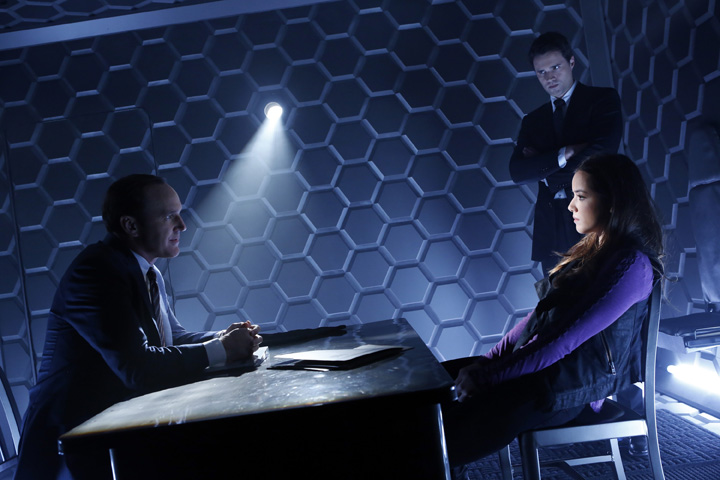
Disney ABC Television Group: Skye's interrogation in the pilot episode.

Don't get me wrong, I love Coulson (he's the only character I'm really attached to), but the character that digital media fans should pay attention to is Skye.  Skye is a self-proclaimed "hacktivist."  We have mentioned this term under digital subcultures but not in depth, so allow me to do an Ishmael and define briefly.

The word hacktivists, you English majors may have guessed, is a hybrid of the terms "hacker" and "activist."  A hacker is someone who hacks computers, an activist is someone who pursues a political cause. A hacktivist, then, seems like someone who is an activist who promotes his or her cause by hacking computers and digital accounts.  One website defines hacktivism as "act of hacking, or breaking into a computer system, for a politically or socially motivated purpose."  Mashable.com "the use of computers and computer networks as a means of protest to promote political ends" and also features a grandiose infographic about the history of hacktivism.  To cite a couple of examples from this infographic, hactivists range from government-sponsored hackers (employed as recently as the war in Syria to keep tabs on certain parties) to underground hackers you may be more inclined to envision when the term comes to mind. Hactivists present a challenge to authority in a sphere--the digital--that governments and other agencies have only limited control over.

courtesy of marsmet tallahassee on flickr


Skye in Marvel's "Agents of S.H.I.E.L.D" falls in the latter category of hacktivists. She is a member of a very sketchy organization called "The Rising Tide" that opposes S.H.I.E.L.D's and other organizations' attempts to hide the truth about top-secret and supernatural events in the world, and she is very vocal about these views in the show.  She is also extremely technologically-savvy, and as a character she is very careful about tying herself to certain sides of a conflict.

In the first episode, Skye is found working independently from a van rennovated to be a communication center, recording messages about how S.H.I.E.L.D. is covering up the truth and how the Rising Tide will thwart them.  S.H.I.E.L.D., inevitably, tracks her down and arrests her for information in a case they are working on, and during her interrogation she boasts that she hacked into their "billions of dollars of equipment" with a laptop she "won in a bet." The line is funny because it's ironic, but it's also true.  In our class as well as in Johnny Evers' lecture about creativity, we have seen examples where enthusiasts and fanatics have outperformed government and commercial research agencies in creating and deploying working technologies such as drones and space probes.  According to Evers' lecture, it was not Steve Jobs who changed the world by himself, but Steve Jobs and a bunch of other obsessed fanatics who worked with him who changed the world.
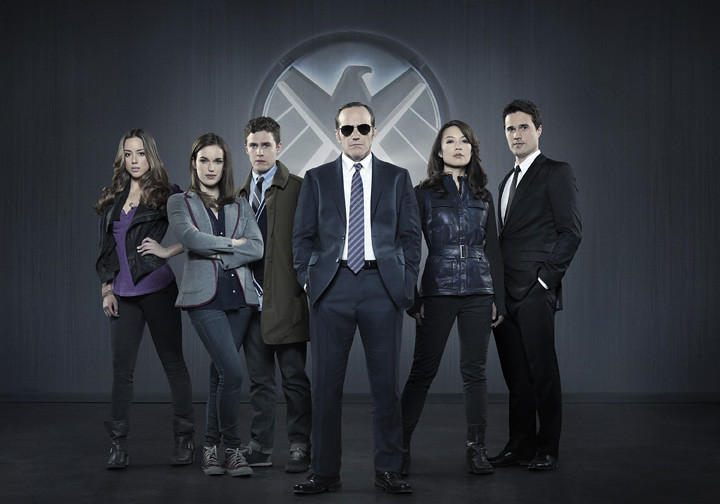
Disney/ABC Television on Flickr. Left to Right: Skye, Simmons, Fitz, Coulson, May, and Ward


Coulson is impressed by Skye's talents, and he sees her as an "asset" and invites her to join his team of S.H.I.E.L.D. agents on their special missions to "protect the world from the weirder world"--an idea opposed to Skye's values, but Skye surprisingly accepts the offer.  None of my friends who are watching the show with me are sure she's entirely trustworthy, but from what I have seen she is using her digital skills to prove herself.  In the second episode, Skye lectures one of the other agents, Ward, about the value of collaboration, and this idea helps the team get out of a literally tight situation.  At the end of the episode, when Coulson asks who idea it was to do such-and-such to save the day, one of the agents says, "it was everyone's idea."  Skye values collaboration because as a hacktivist--someone who knows both computers and political causes--she knows it works in the digital world.  As we very well know, in a movement known as the "Arab Spring" that began a few years ago, several middle eastern governments were toppled by people who banded together through social media and staged successful protests. As Dr. Burton said in our collaboration lecture, it is "no small thing if you can overturn an entire nation with your thumbs."  To quote Skye, "1 person may not have 100% of the solution, but 100 people are more likely to have it."  When people come together through the internet and share their ideas, they learn and solve problems in ways they could not have on their own or in offline company. 

And then in this week's episode, Skye's help was needed in a break-in.  The S.H.I.E.L.D. team was going to Malta to rescue a S.H.I.E.L.D. "asset", but could not land a full break-in squad legally due to international law.  Skye, since she is not yet technically an agent, decides she will go into the manor of the villain billionaire on behalf of the team to help Coulson and Ward break in from the outside.  True to form, she garners an e-vite to a gala at the mansion being held the day of the break-in--and may I add that she did this on her phone while the team is arguing about whether or not she should go--and she introduces herself to the billionaire as a "hactivist."  So from what I have observed of Skye thus far, a hacktivist knows the ins and outs of private and organizational accounts and not only hacks but manipulates the system to get what she wants and make a statement.  Our technology may not be as up-to-speed as it is in the Marvel Universe--touchscreen computer tables, communication earbuds, and instant data access--but it is interesting to see crossovers between that world and ours.

Classmates: I am having friends come over to my apartment to watch the show on Tuesday nights, and if you want to come over let me know!  Marvels "Agents of S.H.I.E.L.D." is on ABC Tuesday nights at 7 local time, or you can watch episodes here: Watch ABC

Monday, September 23, 2013

The Two-edged Sword

I was idling through my Facebook feed--literally JUST NOW--when I came across this article.  It was advertized as an inspirational article, but when I read it I found out it had a lot to do with our class.  The use of social media has very much a two-edged sword dimension about it, as this article illustrates: it can condemn as well as be a useful tool.

The article goes into full detail about the incident, but to summarize, three hundred teenagers broke into ex-NFL player Brian Holloway's house in New York and partied.  They might have gotten away with it, except they started posting pictures and status updates on social media.  Brian Holloway, all the way from Florida, saw the events unfolding over the internet, started a website to identify the culprits, and then he invited them to come over to his house to help clean up.

Now, the next part of this story is really stupid: the parents of these teenagers decided to sue Holloway for "ruining their kids lives" and making them take responsibility for their actions.  Someone smarter-than-your-average-bear wrote a letter to these parents. This line is the killer:

"Instead of dragging your kids back to apologize and clean up the mess, you lashed out at Brian Holloway, threatened to firebomb his house, and are now planning to sue him. For what? For identifying your kids online. Well guess what? Your little Johnny did that himself the minute he tweeted that iPhone photo standing on the dining room table, holding a red solo cup filled with beer."

One of the writer's accusations toward these parents is that among other luxuries we have given the younger generation, we have given them smartphones--implying that parents did so without telling them how to use them responsibly.  Not only do stupid teenagers think they can get away with irresponsible behavior, they think they can STILL get away with it AND brag about their exploits on the internet. In their defense, they were all drunk and they were posting for the benefit of their friends. It's sickening to think that their parents would have seen those posts and not done anything about it except try to cover the sins of their offspring.

But on the other hand, thanks to social media, the owner of the house was able to identify the culprits.  And, putting the internet to use for good, he reached out to those teens and offered them a chance at forgiveness--which, the letter also says, only one grateful leper accepted.  As the author of the letter points out, Holloway had every right to have them arrested and charged for their vandalism, but he did not.

So the internet can be used both for constructive and destructive purposes.  I think it goes to demonstrate the point that I commented about on Shelley's post:  adolescents, prone to risk-taking and impulsive behavior, won't know how to use the internet responsibly and can very easily get in trouble.  However, people who are mature and know how to use the internet properly will do so in ways that can build others.

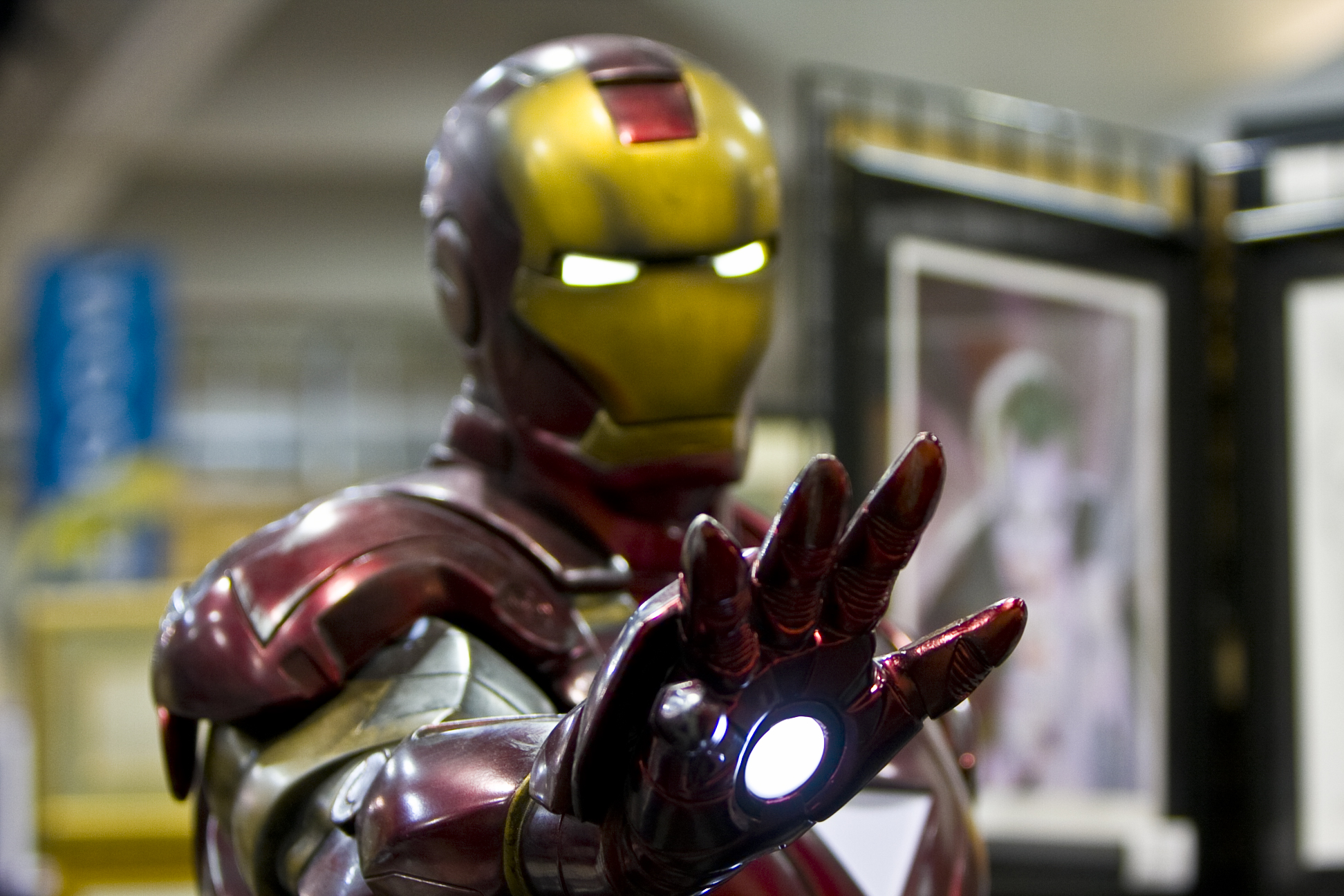
Random tangent: my thoughts on social media on this vein remind me of Iron Man's suit.  In the second Iron Man film we see it constantly being labeled as a WEAPON.  The Iron Man suit is indeed a weapon, but in The Avengers we see that it's advanced technology can also be used for constructive purposes: it is also a TOOL.


Likewise, social media can be used to damage an individual's reputation--including one's own--and it can also be used to build people spiritually and emotionally.  The Church makes such good use of the internet because it recognizes both sides of social media and wants to be an influence for good in counterbalance to the evil which is so easily found online.

Monday, September 16, 2013

I'd Like an Excuse to post More Memes

I'm not exactly sure what else to post about at the moment, so I think I will respond to Dr. Burton's response to my first post on memes, specifically these two questions:

"Behind their apparent silliness, what aspect of digital culture do memes reflect? Are they an efficient authentic mode of communication?"

Question 1,  (I feel rather like Ishmael the way I'm categorizing this). What aspect of digital culture do memes reflect? Referring to Dr. Burton's previous Wednesday lecture, digital culture, loosely re-defined from Charles Geer's definition, includes "visual simulacra, instant communication, ubiquitous media, global connectivity, and applications such as business and cultural and artistic responses." I think memes best reflect global connectivity and cultural/artistic response.


Memes are primarily a form of cultural/artistic response.  Memes are responses, period.  One of my odd quirks is that I like to know how people react to surprising situations, or how they have surprising responses.
I guess memes appeal to me because I'm a very visual person.  I have a great imagination, sure, but knowing what something looks like--a facial expression, a reaction,  an animal--helps me to have a better idea of what kinds of images attach to text or ideas--surprise, sarcasm, etc. And yes, if you want to get meta about it, sometimes people make memes responding to other memes. 

For instance, someone (not me) made this meme:


I made this meme in response:


and just to point out that I think Darth Vader would NOT find that amusing in light of how valuable those particular droids were.  Memes are about sharing ideas about shared interests, which is why they can so easily be "shared".

And with responses, I get a better idea of what to think of the thing being responded to.  For instance, if anyone remembers the classic LDS short film Johnny Lingo, when Johnny makes his uber-surpising offer to Moki (Mahana's Father), Moki's face is...well, blank.  Tulo, the comical narrator, tells Mr. Harris that "he looked as though a coconut had fallen on him."  Ever since watching this film as an adolescent, I have looked for that response in characters in other films, because the "coconut look" is definitely a sign of a humorous surprise.  For instance, here's an example about 24 seconds into this clip from a recent popular movie. : precious (PS I'm not sure what language the subtitles are in).

Also, for better or worse, the meme-making culture is very globally connected, in the english-speaking world at least.  Not only does this culture share a lot of history and stories, but it is also entwined with a lot of fandoms in which inside jokes will be recognized. Fandom memes can simply be fans helping each other recognize something interesting about their interest they never noticed before.

For instance, I used to work in the Student Athlete Building.  I would pass a picture of Jimmer Ferdette every single day, and after a while I realized this picture of Jimmer made me think of the Hulk.


And yes, memes are also a very integral part of mix culture: comparing different stories can be insightful, often in an amusing way.

There's also the hangup that memes cannot be created entirely anonymously:  most meme-generator sites require users to make an account.

Question 2: Are memes an efficient mode of authentic communication?  I would argue in the affirmative, but with limitations.  Memes often represent ideas from heavily entwined cultures and fandoms.  Sometimes you have to be a part of that culture/subculture to get the joke.

This is a meme I made:

You won't get it unless you have seen both Revenge of the Sith and Funny Girl.  It doesn't work if you have to go back and explain the joke. Memes are supposed to be quick.

BYU has an entire facebook site devoted to BYU and Mormon-related memes. It works well as long as you get the references.  Efficient? In some ways, when sharing ideas is enhanced by the illustration and people comprehend the meaning of (A) the picture, (B) the caption, and (C) how they are connected.  But efficient in the sense that they compart useful knowledge to us?  Well, perhaps in the sense that connecting useless knowledge can help us relate useful knowledge.
Authentic? Debatable.  Memes that float around freely online, on Google search and on Facebook, are usually anonymous.  It is an easy way to get anonymous popularity.

So memes are a reflection of the fast-paced, interconnected culture we live in.  It is fitting that they are both textual and visual.  And I would argue that they are effective as well as entertaining.